Pilothouse Marine Services
  • Home
  • Marine Industry Services
    • Marine Surveys
    • Yacht Inspections
    • Infrared Thermography
  • Contact
  • About

Infrared Thermography

Applying Thermal Imaging Techniques to Marine Applications

Thermal Imaging is one of the most valuable diagnostic tools used on commercial and recreational vessels

By detecting temperature anomalies that are usually invisible to the naked eye, thermal imaging allows corrective action to be taken before costly system failures occur.

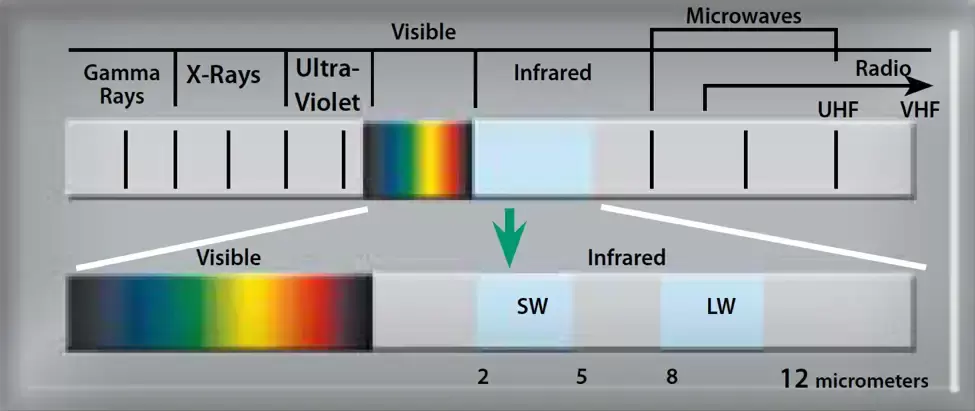
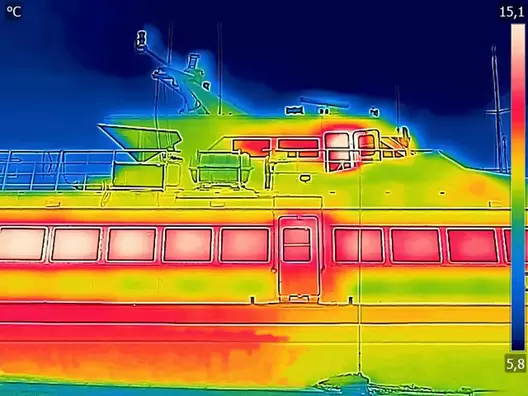
Thermal imaging cameras convert the energy in the infrared wavelength into a visible light display – called thermograms.
​ All objects above absolute zero emit thermal infrared energy, so thermal cameras can passively see all objects, regardless of ambient light. The amount of radiation emitted from an object increases with temperature; therefore, thermography allows us to see variations in temperatures. When viewed / captured through a thermal imaging camera, warm objects stand out well against cooler backgrounds.

What Is Infrared?

​Our eyes are detectors that are designed to detect electromagnetic radiation in the visible light spectrum. All other forms of electromagnetic radiation, such as infrared, are invisible to the human eye.
​Infrared radiation lies between the visible and microwave portions of the electromagnetic spectrum. The primary source of infrared radiation is heat or thermal radiation. Any object that has a temperature above absolute zero (-273.15 degrees Celsius or 0 Kelvin) emits radiation in the infrared region. Even objects that we think of as being very cold, such as ice cubes, emit infrared radiation.
Electromagnetic Spectrum

A Powerful Non-Destructive Testing Process

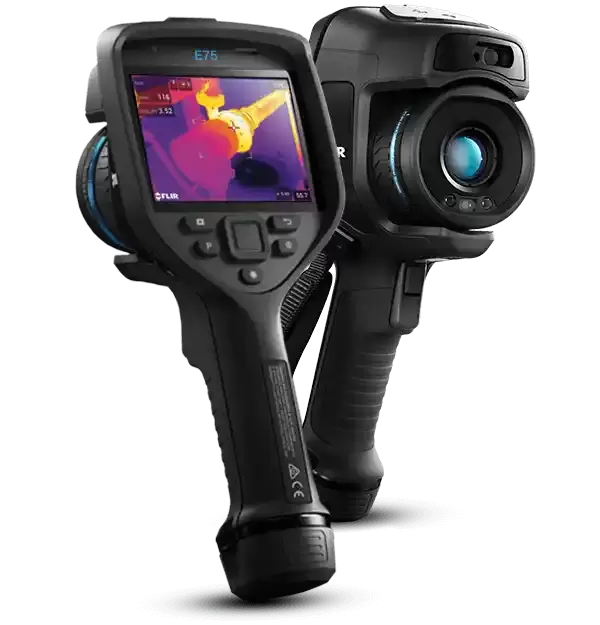
​Our high resolution thermal imaging cameras from FLIR are reliable non-contact instruments which are able to scan and visualize the temperature distribution of entire surfaces of machinery, electrical equipment, and fiberglass hulls / decks quickly and accurately. 
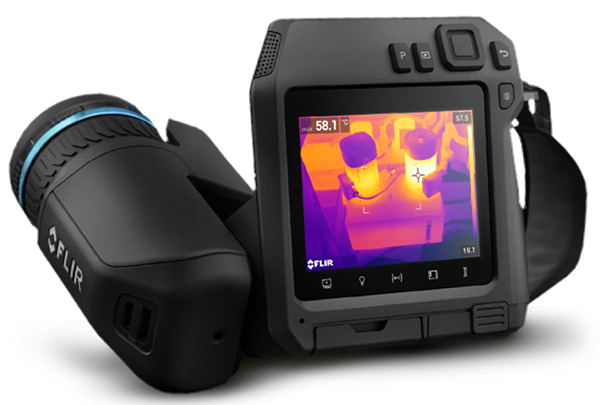
FLIR Camera Equipment
Infrared Camera
Resolution
Up to 161,472 pixels across on image. Each pixel is a radiometric measurement point and contains detailed data for the image.
Thermal Sensitivity
Describes how small a temperature difference the camera can detect. Our cameras have a thermal sensitivity down to 0.03°C. 
Object Temperature Range
-20°C to 120°C (-4°F to 248°F) 0°C to 650°C (32°F to 1202°F) 300°C to 1500°C (572°F to 2732°F)
Accuracy
±2°C (±3.6°F) or ±2% of reading

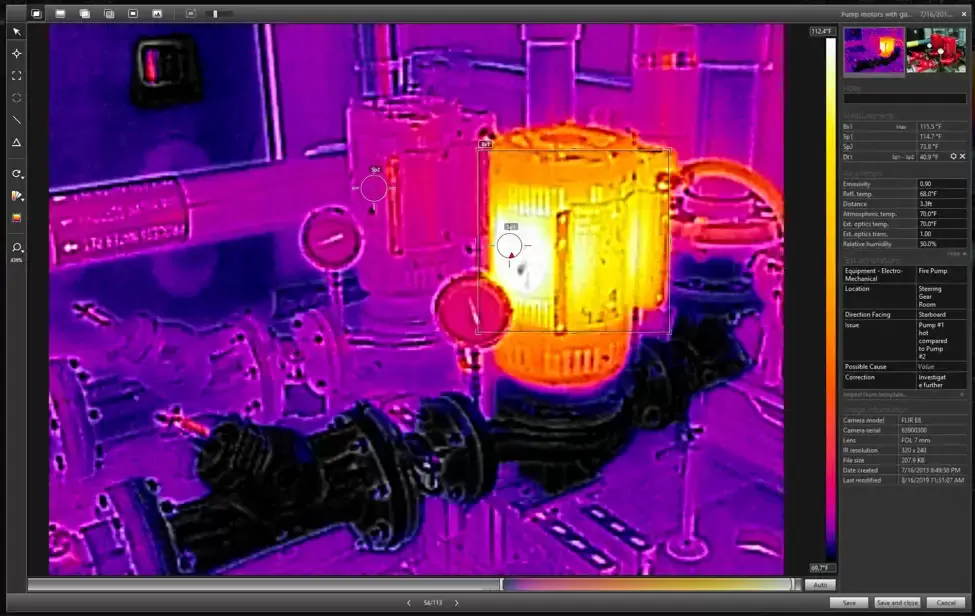
A thermogram example

Thermogram Displaying Over Heating
  • The image above displays 2 electric motor driven fire pumps in the aft steering gear room. Both pumps are energized.
  • Pump #1 in the foreground is displaying a higher thermal image (more heat) than pump #2 in the background. With the color palette selected - hotter temperatures are lighter colored and cooler temperatures are darker colors.
  • If both pumps are running under similar load characteristics - we expect them to be approximately the same temperature.
  • At this stage - this is Qualitative Thermography
  • When we spot an anomaly such as this during our infrared survey - we then take multiple images and analyze them in our advance software tools.
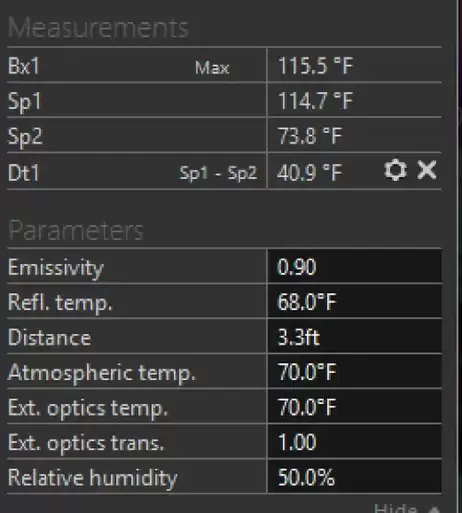
Thermogram Parameters
  • The snapshot above shows just some of the basic parameters and measurements we can capture within the software by analyzing the radiometric image.
  • We are now in the Quantitative Thermography stage
  • Bx1 is a box measurement drawn around the electric motor and captures max, min, and average temperatures.
  • Sp1 and Sp2 are spot measurements. Notice Sp1 is on pump #1 and Sp2 is on pump #2. 
  • Dt1 is a Delta reading. It clearly shows that pump #1 is running 40.9 degrees warmer than pump #2. 
Further investigation will include taking and analyzing images of the most common failure points (not show in this image). These include motor to pump mounting, the bearings, and the motor body. We will recommend to the client that the fire pump be taken off line and further investigation performed to determine if it a possible alignment issue, a bearing issue, or perhaps a motor electric winding issue exists. It could also be friction or a restriction in the actual pump / piping that is placing an increased load on the electric motor. 

This type of issue would not have been noticed under normal circumstances until the issue manifested itself in a motor failure, loss of fireman pressure, or possible fire. 

Thermal Analysis and Reports

Once all the images and videos are captured aboard your vessel - we load those files into our analysis software. From there we can use the advanced features to help with:
  • the overall analysis
  • select the image type and color pallet to best represent the object
  • apply various measurement points
  • calculate Delta T values
  • compare thermal patterns of similar equipment (or before and after shots)
  • select the tables and templates of data elements to include with the report
  • output data files to create graphs
  • process the hundreds of images into our Customer Reports
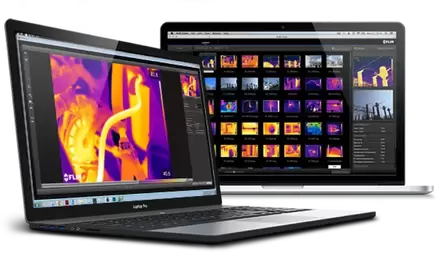
FLIR Tools Analysis Software
The pictures below are examples of the various image modes we can use to best depict the thermal details of the object.
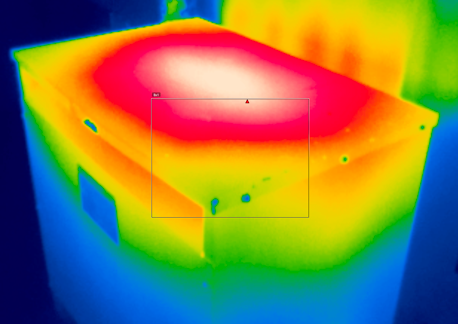
Thermal Image
Thermal Only Image
Thermal Image with MSX Technology
Thermal Image with MSX - notice the details
Thermal Image with Picture-In-Picture-Image
Picture in a Picture format
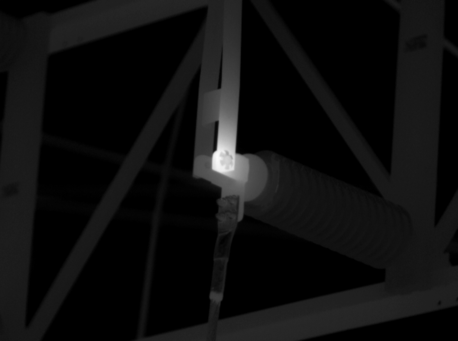
Gray Scale Pallet Image
Gray Scale Pallet - used to show contrast

Thermal Imaging Service Offerings

At Pilothouse Marine Services - we offer 3 basic thermal imaging services that match up with a typical vessel. Electrical - Mechanical - Composite Materials
  • Electrical and Mechanical can be combined in a whole vessel Preventative Maintenance Program.
  • These services are priced either on a per vessel basis or by the hour (whichever best meets your needs, the situation, or the scope of work).
Electrical Systems

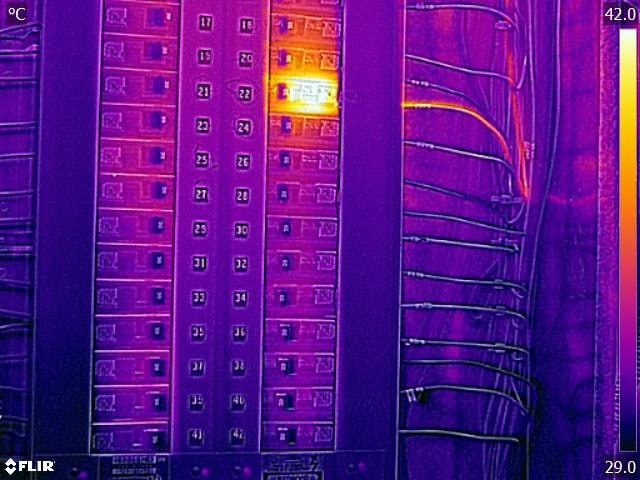
Monitor and diagnose the condition of electrical installations and components.

Discover HOT-SPOTS - take corrective actions.
Picture
Typical Elements
  • Direct Current (DC) Systems
  • DC electric panels, batteries, & bundled wires
  • DC Equipment (electronics, winches, windlass, lights)
  • Alternating Current (AC) Systems
  • AC panels, shore power, house power, & bundled wires
  • AC Equipment (inverters, galley, refrigeration, A/C)
When Performed
  • Preventative Maintenance Program
  • To Baseline installed system
  • Investigative (troubleshoot current issue/s)
  • Sea Trials (New Construction or post Yard Work)
  • Prior to Yard Period to identify repair work
  • Follow-up after repair work has been performed
Inspection Process
  • Data is captured against all possible power sources appropriate to vessel (shore power, generator, inverter, batteries)
  • Each system is operated under typical load/s
  • Image capture is performed
  • Data analysis and report generation
  • Debrief with owners, Captains, maintenance supervisors, yard manager, repair techs

Picture
Mechanical Systems

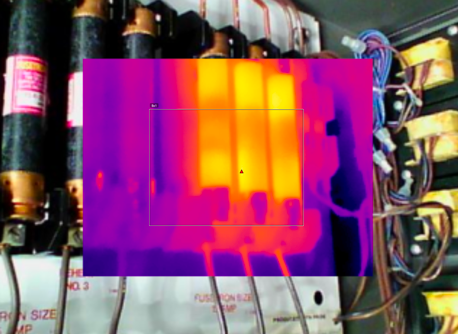
Scan and visualize the temperature distribution of entire surfaces of machinery.

Avoid costly equipment breakdowns.

Typical Elements
  • Electric Motors
  • Internal Combustion Engines (Mains, Generators)
  • Bearings (motors, pillow block, shaft, etc)
  • Couplers
  • Tanks - Piping - Valves
  • Exhaust​ System & Components
When Performed
  • Preventative Maintenance Program
  • To Baseline installed system
  • Investigative (troubleshoot current issue/s)
  • Sea Trials (New Construction or post Yard Work)
  • Prior to Yard Period to identify repair work
  • Follow-up after repair work has been performed
Inspection Process
  • Systems should be aligned and operated in typical underway modes for specific vessel
  • Loads should vary from normal to high
  • Image capture is performed
  • Data analysis and report generation
  • Debrief with owners, Captains, maintenance supervisors, yard manager, repair techs

Composite Materials

Moisture, delamination, voids, and other common issues can be "seen" as thermal differences.

Far advanced to the typical "moisture meter".

Visualize defects, moisture, or impact damage that would not have been possible without destructive efforts such as coring / drilling.
Picture
Typical Elements
  • ​​Fiberglass Reinforced Hulls, Decks, & Components
  • Liquid intrusion
  • Osmotic blisters
  • Delamination or disbonding
  • Voids
  • Wooden Boat Hulls
    • Moisture accumulation
    • Open seams between planking
    • Mechanical fasteners
When Performed
  • Investigative (extent / degree of moisture)
  • Map out areas of moisture intrusion
  • Surveys - to confirm or disprove wet decks, core, hull
  • Post damage analysis (impact, hurricanes, lightning)
  • Composite layup or infusion
Inspection Process
  • Visual inspection inside and out
  • Consult vessel drawings
  • Apply uniform heat to area being imaged
  • Image capture is performed
  • Data analysis and report generation
  • Debrief with owners, Captains, maintenance supervisors, yard manager, repair techs
  • Coring or other destructive testing may be required to confirm

Services

Marine Surveys
Yacht Inspections
​Thermal Imaging

Company

About Us

Support

Contact
Servicing: Beaufort, Morehead City, New Bern, Oriental, Washington, Manteo, Swansboro, Hampstead, Wilmington, Southport, Southeastern VA,

Copyright Pilothouse Marine Services, LLC 2025, All rights reserved.

Marine Surveyor | Pilothouse Marine Services
  • Home
  • Marine Industry Services
    • Marine Surveys
    • Yacht Inspections
    • Infrared Thermography
  • Contact
  • About